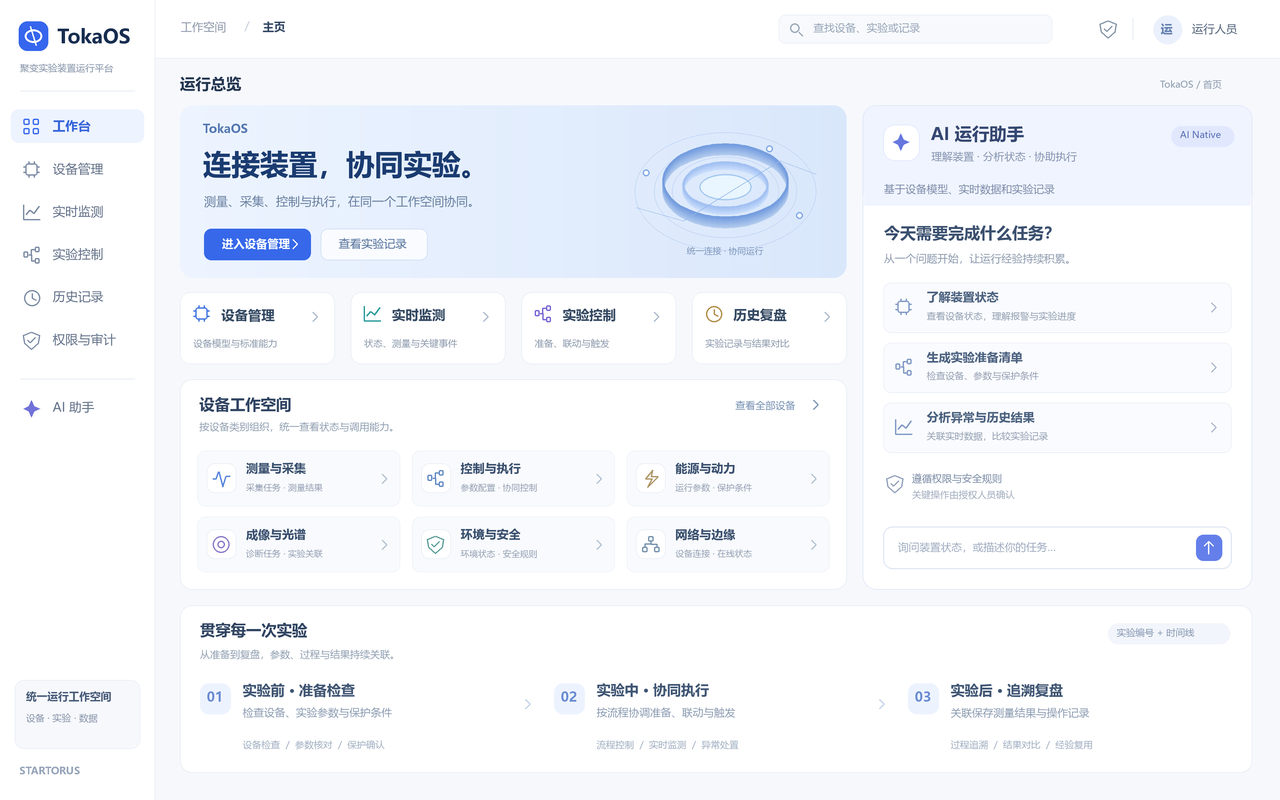
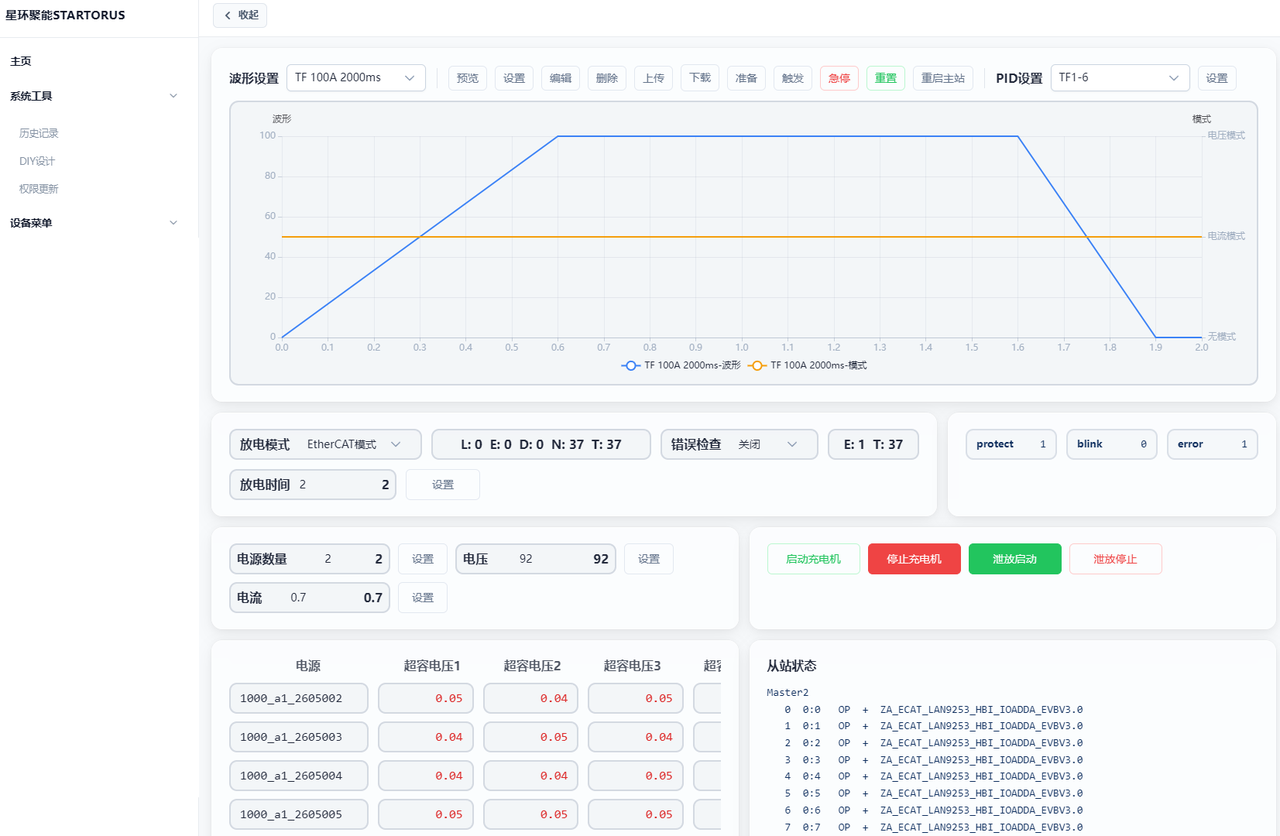
TokaOS is an operations platform for experimental fusion facilities. It brings distributed measurement, data acquisition, control, and actuation units into a unified workspace, supporting device management, real-time monitoring, experiment control, and post-experiment review. Before an experiment, TokaOS helps check devices, parameters, and protection conditions. During an experiment, it coordinates preparation, linked operations, triggering, and exception response according to defined procedures. After an experiment, it stores parameters, measurement results, and operation logs linked by experiment ID and timeline, enabling process traceability and comparison of results. Using device models, real-time data, and experiment records, AI helps operators understand facility status, analyze anomalies, and plan tasks. It also assists with execution within permission and safety constraints, capturing operational experience for reuse.
Features
TokaOS integrates AI into device models, real-time data, experiment workflows, and access controls, enabling it to use operational context to help personnel understand the facility, analyze its status, and complete tasks.
| Feature | Description |
| Facility Awareness | Uses device identities, locations, connections, standard capabilities, and current states to answer device-related questions and explain measurement sources, alarm impacts, and experiment progress. |
| Situational Analysis | Combines real-time status, historical data, equipment documentation, experiment records, and maintenance experience to help identify anomalies, assess their impact, compare past experiments, and summarize results. Analysis is supported by evidence linked to devices, timestamps, and records. |
| Task Planning | Generates checklists and execution sequences based on goals for experiment preparation, equipment inspection, or anomaly analysis. Reads status, invokes standard capabilities, waits for feedback, and verifies results step by step to help complete tasks within authorized limits. |
| Controlled Execution | Follows platform permissions and safety rules. Routine queries can be completed directly; actions involving energy, discharge, protection, or equipment safety require confirmation from authorized personnel. Explains the reasons and expected impact before execution and verifies results afterward, leaving key decisions with the responsible person. |
| Knowledge Retention | Links operator confirmations, corrections, and rejections of AI recommendations to devices, experiments, and results. Accumulates preparation methods, causes of anomalies, and response procedures so teams can continue to reuse operational experience. |
| Feature | Description |
| Facility Modeling | Provides a unified description of device identities, locations, nodes, connections, functions, states, and parent systems. Covers equipment categories including data acquisition and measurement, control and actuation, energy and power, imaging and spectroscopy, environment and safety, and network and edge infrastructure. Measurement results, alarms, and operation logs can be linked to specific devices, affected workflows, and responsible personnel. |
| Capability Management | Defines standard capabilities for queries, status, parameters, actions, alarms, and feedback, with explicit data units, for consistent invocation by higher-level workflows. New devices or workflows can be incorporated into the unified operations system by specifying their identities, capabilities, data, and rules, supporting equipment replacement and the addition of new device models. |
| Real-Time Monitoring | Continuously aggregates device connectivity status, measurements, operating states, alarms, and key events while preserving their temporal relationships. Helps operators assess device availability, understand state changes, and determine whether anomalies affect experiment progress. |
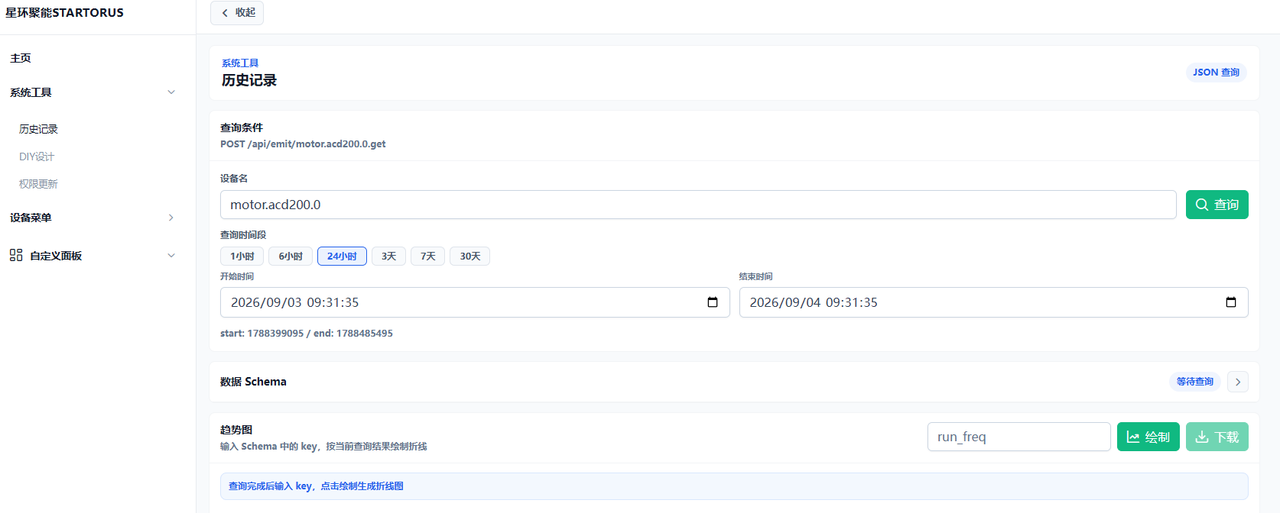
| Experiment Data | Stores experiment parameters, process events, device states, measurement results, and operation logs linked by experiment ID and timeline. Supports tracing results back to the process and comparing past experiments, building a growing collection of reusable experimental data. |
| Workflow Protection | Organizes experiment preparation, coordinated control, and anomaly response around preconditions, execution sequences, feedback, and protection rules. Checks status, waits for feedback, and verifies results during execution, pausing the workflow when conditions are not met. |
| Access Control and Audit | Assigns permissions by project, system, device, and operation type, with distinct authorization levels for queries, recommendations, simulations, and actual execution. Records the operator, timestamp, target, parameters, confirmation, and result of critical operations to support tiered authorization, process traceability, and result verification. |
| Applications | How TokaOS Helps |
| Daily Facility Operations | Provides a global view of device states, connections, alarms, and operating trends, reducing the need to switch repeatedly between systems. |
| Experiment Preparation and Execution | Checks devices, parameters, and safety conditions against experiment goals, then follows workflows for preparation, coordinated operation, triggering, stopping, and resetting. |
| Data Acquisition and Diagnostics | Centrally manages measurement, data acquisition, and diagnostic tasks, displays results in real time, and automatically links them to the experimental process. |
| Safety and Anomaly Response | Identifies risks based on real-time status and protection rules, indicates the scope of impact, and helps personnel perform checks, respond to anomalies, and restore operations. |
| Historical Analysis and Review | Traces data by experiment, time, and device, compares results, identifies patterns, and enables the reuse of effective practices. |
| AI Operations Assistant | Uses natural language to answer questions about facility status, explain alarms, generate preparation checklists, assist with analysis, and produce experiment summaries. |